
A town of plants and artists
Milly-la-Forêt: market, plants, art and Trois Pignons
Milly is more than a gateway to Trois Pignons. Its market hall, plant gardens, places connected with Cocteau and a sculpture hidden in the woods make it a destination in its own right.
PLACES AND LANDMARKS
Find it on the map
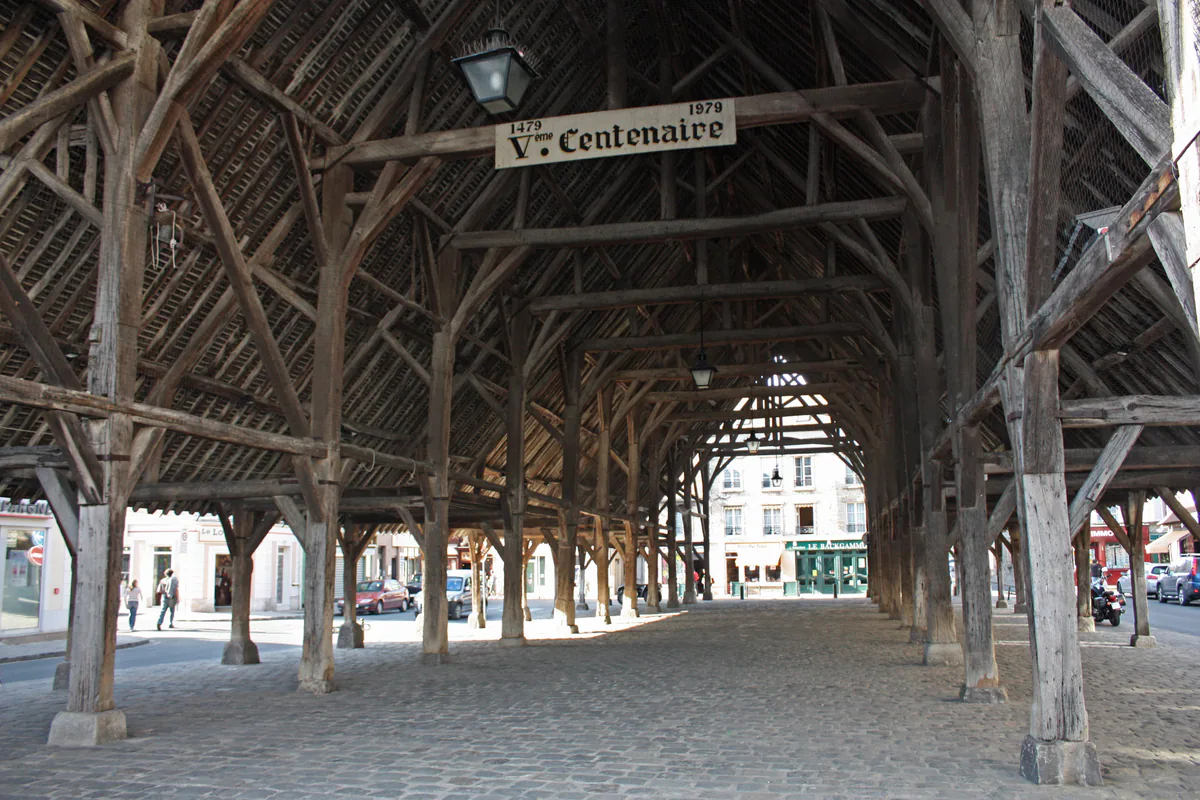
Milly-la-Forêt market hall
Place du Marché91490 Milly-la-Forêt
France
The simplest landmark for starting a walk through the old centre.
Milly-la-Forêt tourist office
47 rue Langlois91490 Milly-la-Forêt
France
A useful address for a local map and current visiting conditions.
Milly is more than a hiking base
Milly-la-Forêt occupies a distinctive place between the Gâtinais and the sandstone landscape. It has a genuine town centre built around a timber market hall, yet its identity also lies in cultivated plants, gardens and the artists who chose to live and work here. Jean Cocteau made his home in Milly. Jean Tinguely and friends created Le Cyclop, a monumental artwork hidden in the woods. The trails and boulders of Trois Pignons begin nearby.
Those threads do not fit comfortably into half a day. On a first visit, combine the centre with one major attraction, then keep the forest to a short walk or give it another day. The official introduction to Milly is the place to check which sites and events are available during your stay.
Coming without a car takes real preparation
Milly has no railway station. The tourist office identifies Maisse as the nearest, on RER line D, about six kilometres away. Do not improvise that final stretch. Buses may depend on the day and school calendar. Demand-responsive transport requires advance booking, as does a taxi.
Enter your exact date in Île-de-France Mobilités and check the outward and return trips separately. The regional transport authority explains how to use and book demand-responsive transport. If no sensible connection fits, choose another day or arrange a suitable bicycle rather than assuming a solution will appear on arrival.
Once in Milly, the centre is easy to explore on foot. Le Cyclop, the plant conservatory and the Trois Pignons trailheads are separate destinations, not neighbouring galleries in one museum. Mark each on a map before booking. With young children, luggage or limited mobility, the distance between them can shape the entire day.
Begin beneath the market hall
The great hall immediately gives the town its scale. Construction was authorised from 1479 and its roof rests on forty-eight oak pillars, according to the municipality’s heritage introduction. Listed as a historic monument in 1923, it remains a living public space rather than an object sealed behind glass.
The weekly market gathers beneath and around the hall on Thursday. Confirm it on the municipal market page if your trip depends on it. On other days, the timbers, square and surrounding lanes still reward a visit. Notice the houses, shops and relationship between place du Marché, the church and smaller streets instead of immediately leaving for the forest.
The market can sometimes provide a picnic lunch. Otherwise, choose somewhere in the centre and check its current service directly. Milly sits among honey, plants, vegetables and agricultural production, but real provenance matters more than a rustic label. Local food and producers points to current local directories.
Follow the thread of plants and Cocteau
Milly has a long connection with medicinal, aromatic and perfume plants. The French National Conservatory of Perfume, Medicinal and Aromatic Plants works to conserve, produce and promote them. Its visitor space and gardens make the subject tangible, but the visiting calendar is seasonal. Check opening, the type of visit and access before travelling to chemin des Petits Saules.
In town, Chapelle Saint-Blaise des Simples links this plant heritage with Jean Cocteau. The Jean Cocteau House at 15 rue du Lau preserves rooms where the artist lived and worked, together with its garden. Consult its official tourism listing for current visiting arrangements. The house, chapel and conservatory speak to one another, but do not assume they share the same opening days.
A day around this theme might begin at the market or among the old streets, continue with the house or chapel, then devote the afternoon to the conservatory. It suits visitors who enjoy gardens, craft and an unhurried encounter with a place. For a family, choose two stops and include a proper break instead of attempting them all.
Make Le Cyclop the main event
Le Cyclop is not a sculpture to glance at for five minutes from a car park. Jean Tinguely began this collaborative construction in the woods with Niki de Saint Phalle and many other artists. The exterior belongs to its woodland setting, while the interior is visited with a guide according to the season and available places.
Check the official booking page and conditions before setting out. Children under eight cannot enter the work. That rule should shape a family day when you book, not when you arrive. Woodland terrain, weather and approach time matter too. Plan an easy return to Milly afterwards instead of adding a long hike.
Walking in Trois Pignons
Trois Pignons is a demanding landscape of sand, pines, heath and rocky relief. The famous 25 Bosses circuit is not an after-lunch stroll. Even a shorter outing needs a precise start, a readable route, water and spare time.
Following the 2026 fires, check access on the day using the ONF map of open roads and trails. An open area nearby does not mean your entire circuit is open. Walks in Trois Pignons helps identify a documented route and understand the main approaches.
If the town is your priority, settle for a short walk in a confirmed open sector. If the forest is the reason for your visit, give it a separate day and use Milly for food, supplies and the night. Both experiences will be better for it.
What to do when it rains
Le Cyclop and the gardens do not automatically become good wet-weather choices. Espace culturel Paul Bédu in the centre displays nineteenth and twentieth-century art and temporary exhibitions. Check its official listing before going, then pair it with the Cocteau House if that is receiving visitors on the same day.
A museum morning, lunch near the market hall and an interval of dry weather in the centre make an honest alternative. With children, Family activities helps choose by age rather than replacing a cancelled walk at random.
Where to stay
Milly is a logical base for Le Cyclop, the plant heritage and the western side of Trois Pignons. It also gives you somewhere to buy food before a walk. Fontainebleau works better when the palace, line R and several forest sectors define the stay. Rural accommodation can bring real quiet, but often requires careful checks of transport, meals and distance to the chosen start.
Where to stay compares these options. Always place the accommodation, final transport link and main activity on the same map. Around Milly, a few unplanned kilometres can change the day far more than they would in a town with its own railway station.