
A small town shaped by the Loing
Moret-sur-Loing: planning a day beside the water
Moret is best explored on foot, between fortified gates, old facades and reflections on the Loing. A well-paced day also leaves time to follow the river or continue towards Thomery.
PLACES AND LANDMARKS
Find it on the map
Moret Seine et Loing tourist office
4 bis place de Samois77250 Moret-Loing-et-Orvanne
France
A good starting point for a town map and confirmation of which visits are open.
What makes Moret different
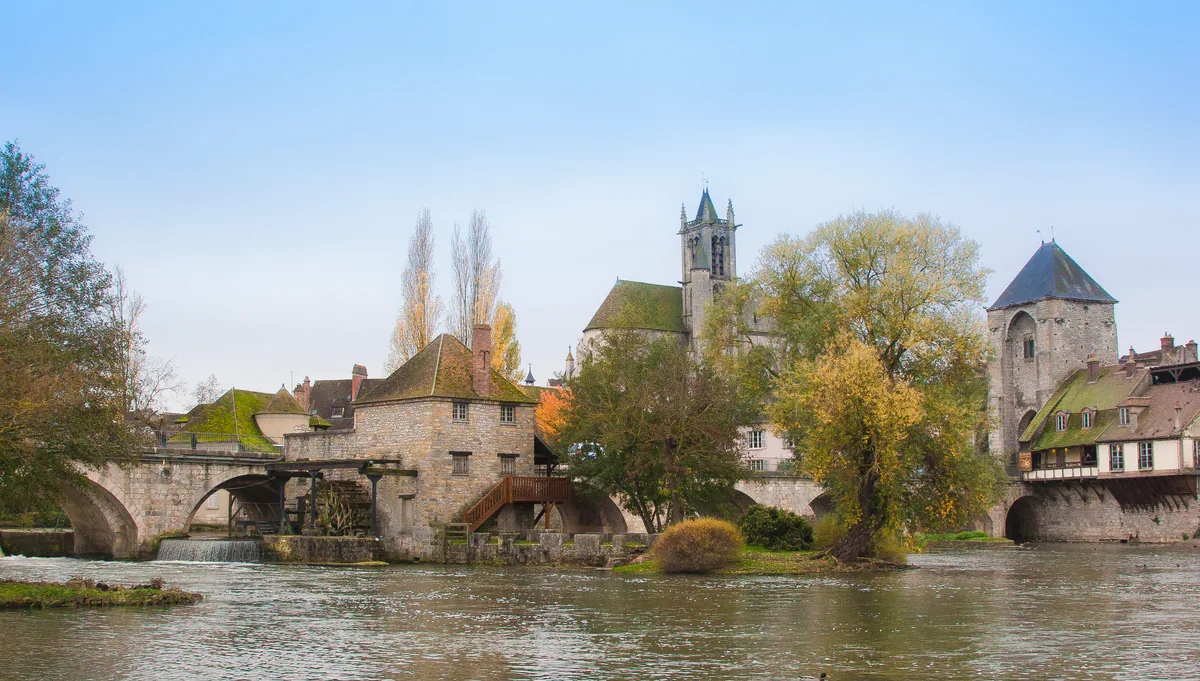
Moret-sur-Loing is not a medieval stage set detached from its surroundings. Its gates, narrow streets, church and old keep make most sense when you reach the bridge and look back at the town from the water. The Loing carried people and goods long before it became a subject for painters. The river still suggests the right way to visit today: slowly, with frequent changes of viewpoint.
The centre is compact enough to explore on foot, yet a full day is not excessive. It gives you time to notice details on the Renaissance facades, enter a cultural venue if one is open, have a relaxed lunch and walk beside the water. The tourist office introduces Moret’s main landmarks and is the best first stop for a current map.
Coming by train and planning the last stretch
The station serving the town is called Moret-Veneux-les-Sablons. It is on Transilien line R, but the medieval gates are not beside the platform. Look at the route between the station and your first stop before setting off. Depending on the group, weather and luggage, you may choose to walk or look for a local connection.
Check Île-de-France Mobilités for your actual date and time, then save the return journey. A late disruption or missed final bus matters more in a small town than it does in Paris. If you continue to Thomery, Sorques or a trailhead, treat that journey as a second leg, not a detail to solve after arrival. Fontainebleau without a car helps build the day around the transport that really runs.
A simple walk that reveals the town
From place de Samois, move into the old centre and rue Grande. Porte de Samois and Porte de Bourgogne once marked the edges of the fortified town. Between them, slow down for shop signs, courtyards glimpsed from the street and facades carrying traces of several periods. Notre-Dame church and the remains of the keep recall Moret’s role as both a royal and defensive place.
Save the bridge for a point when you can properly stop. Its arches, former mills, houses and moving water create several different scenes depending on the bank and light. Do not settle for the first roadside photograph. Dropping down towards the riverbank or following part of the towpath shows how the town fits around the Loing.
This thread makes a pleasant walk, but it is not a waymarked circuit with a guaranteed distance. High water, works or a closed passage can require a detour. Pick up the available map at the Moret Seine et Loing tourist office and follow any local signs beside the water.
Looking through Sisley’s eyes
Alfred Sisley painted Moret and its surroundings many times. The pleasure is not in finding a perfect reproduction of every canvas, but in recognising his subjects: a bridge seen at an angle, a row of houses, changing sky over the river or a road leading away. Return to the same spot after lunch and the light will already have shifted the colours.
This way of reading the landscape works particularly well for families. Ask each person to choose a frame, identify three colours in the water or sketch a roofline. It gives children a purpose without turning the town into a quiz. To place this story alongside the Barbizon painters and other local history, continue with our heritage guide.
Market, lunch and local produce
The municipality lists Moret markets on Tuesday at Pavé Neuf and Friday near the town hall. Check the municipal market page before relying on one, as special dates can alter arrangements. On market day, bread, fruit and a few things to take away can make an easy lunch. At other times, choose somewhere in the centre or buy your picnic before reaching the towpath.
Do not buy a speciality simply because a sign claims a long tradition. Ask where it was made and what it contains. The Moret Seine et Loing council community maintains leads for area markets and producers. Local food and producers also helps fit a food stop into a wider stay.
Choose just one extension
A visit to Moret can continue in three directions, but trying all three on the same day removes the calm that makes the town appealing.
Towards Thomery, old fruit walls, the Seine and woodland reveal another relationship with the landscape. The walk near Thomery is a proper outing to plan, with its own access and walking time.
Towards Sorques, a protected plain offers wetlands and birdwatching hides. The five-kilometre discovery circuit described by Fontainebleau Tourism calls for suitable shoes and a conditions check, particularly after rain.
For cyclists, the Seine à Vélo stage between Bois-le-Roi and Moret has an official listing with roadbook and route file. Treat it as a complete ride. Do not append it to a long walking visit without checking ability, bicycle, return arrangements and remaining daylight.
On the water, a guided outing or rental requires direct confirmation of ability level, equipment, meeting point and return arrangements. The Nature Loisir Évasion page explains the kinds of activity available without assuming there will be a place on your date.
A dependable wet-weather plan
The municipal museum is the best starting point for an indoor visit. Its official page introduces the permanent display and exhibitions, but check opening days before travelling. Add a cafe stop in the centre and use a break in the rain for the gates and bridge.
Take care with the Barley Sugar Museum. Its tourism listing currently marks it temporarily closed while work is carried out on the access footbridge. Do not build a rainy-day itinerary around it without confirmation that it has reopened.
Where to stay and slow down
A night in Moret lets you return to the riverbanks early or late in the day, when fewer day visitors are around. Thomery suits a stay focused on walking and the Seine. Fontainebleau gives a wider choice for combining the palace, restaurants and several forest sectors, at the cost of a separate journey to Moret.
Compare those approaches in Where to stay. Whichever address you choose, place it on a map beside the station, old centre and main activity. Accommodation described as “near Moret” may be lovely while still requiring a car or carefully planned transfer.