
A town between court and woodland
Fontainebleau: palace, town and forest in one day
Fontainebleau deserves more than a palace photograph followed by a dash into the forest. This guide joins the palace, town centre and time outdoors at a pace that still feels like a day off.
PLACES AND LANDMARKS
Find it on the map
Palace of Fontainebleau
Place du Général de Gaulle77300 Fontainebleau
France
A useful pin for the palace, courtyards, gardens and the start of a walk through town.
Fontainebleau tourist information desk
4 bis place de la République77300 Fontainebleau
France
A useful address for a current map and advice about what is open that day.
Why the town deserves a full day
Fontainebleau brings together three experiences that could each fill several hours: a palace occupied and reshaped by French rulers over centuries, a small town where people shop and meet for lunch, and a vast forest that begins almost at its doorstep. The usual mistake is to tour the state rooms, cross every garden and squeeze in a long hike before the train home. That leaves you checking the time everywhere.
On a first visit, choose one priority. If the palace brought you here, make it the heart of the day and keep the forest walk short. If you already know the palace, the centre can become the starting point for a day mostly spent on the trails. Our two-day Fontainebleau guide offers the most comfortable pace when both matter equally.
Arriving by train: the station is not in the centre
The station is called Fontainebleau-Avon. It stands in Avon, not outside the palace gates. Fontainebleau Tourism puts the distance between the station and palace at about three kilometres. A local bus or a walk therefore forms part of the journey and needs space in your plan.
Before leaving, use Île-de-France Mobilités to check the outward train, the local connection and, most importantly, the trip home. Do not plan around a bus number remembered from an old article because services and engineering work change. Walking through the park can be a lovely approach when its entrances are open, but it is not a guaranteed shortcut. Fontainebleau without a car helps you choose between walking, taking a bus and starting a trail near a station.
A day with room to breathe
Begin in the centre. Place de la République is a useful point for a map and, on Tuesday, Friday and Sunday mornings, for the weekly market listed by the tourist office. Check the current municipal calendar if the market is the main reason for your trip. The streets around rue Grande, rue Montebello and place Napoléon show Fontainebleau as a lived-in town, with cafes, shops and terraces rather than merely a corridor to the palace.
Then allow a generous block of time for the palace. Its appeal lies in layers of history, not one famous room. The official palace website publishes current access, exhibitions and visiting conditions. Decide which circuit matters before entering, especially with children or anyone who tires easily. Taking in a few suites properly feels far better than marching quickly through every room.
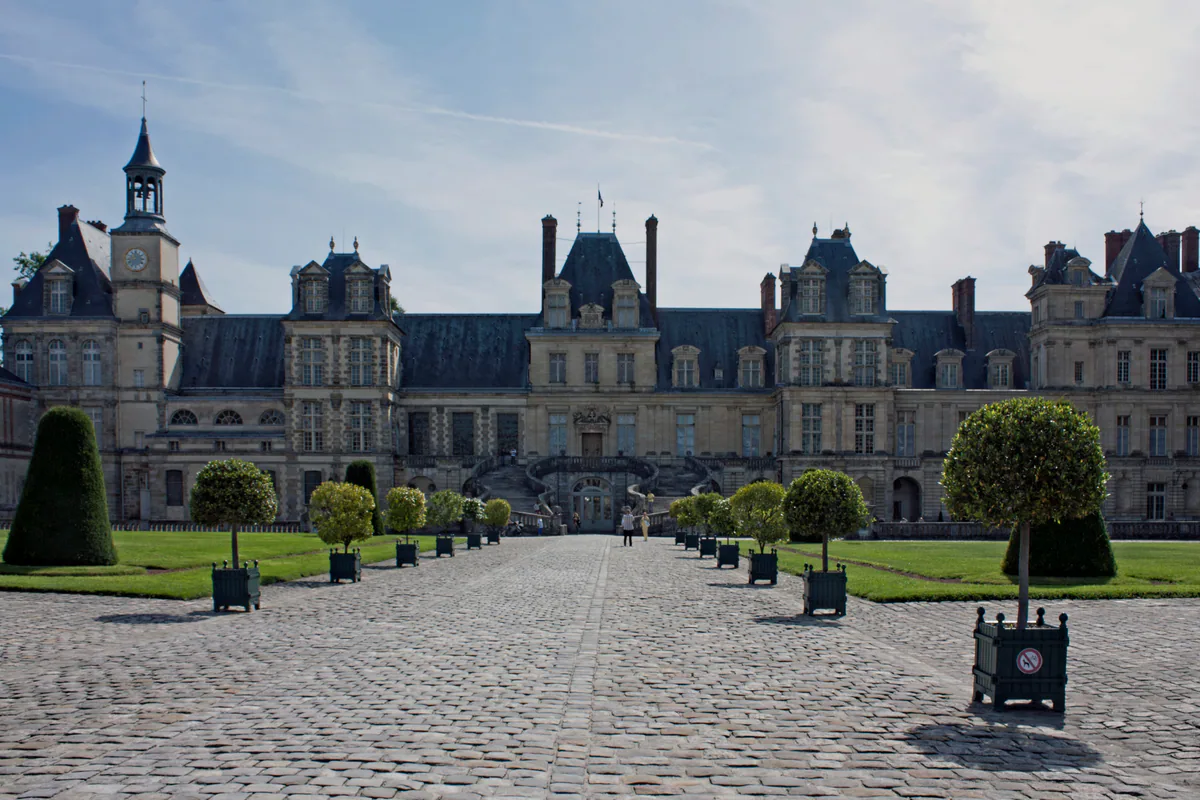
After the interiors, the courtyards and gardens offer a welcome change of pace. The Jardin de Diane, English Garden, Grand Parterre, park and canal are not a small decorative fringe. They extend the story of the estate and visually connect Fontainebleau with Avon. Entrances and opening arrangements may differ from those of the palace, so check the official gardens listing on the day.
Adding forest without turning the day into a challenge
After a full palace visit, a demanding rocky circuit is rarely the best choice. A short walk at the forest edge or in a clearly open sector still reveals sand, pines, oaks and sandstone boulders. For a hike that is an important part of the trip, start in the morning with a dedicated route instead.
The walks and routes hub compares the main sectors. Franchard suits visitors keen to understand the sandstone landscape, while Cassepot can be planned from the Fontainebleau-Avon side. A place name alone does not guarantee access. Following the 2026 fires, open the ONF map of accessible roads and trails that morning and obey every closure on the ground.
Carry water, an offline map and suitable shoes even for a modest walk. The forest has a dense web of junctions and informal paths. Our Fontainebleau Forest guide gathers the important checks, including hunting dates and how to describe your location if something goes wrong.
Eating without spending an hour deciding
The centre has far more choice than most forest trailheads. Decide in the morning whether you want a sit-down lunch or a picnic. On market days, fruit, bread and food to take away can make an easy meal, although no individual stall should be assumed. For a particular restaurant, check its own website and reserve when that looks sensible.
If you carry lunch into the forest, bring all the water you need and take every wrapper home. A bench in the park and a stop among the boulders require different kit and leave different margins for the return. Local food and producers gives leads for finding regional produce without pretending that a fixed list of businesses will stay current forever.
When it rains
Wet weather naturally favours the palace, but do not treat it as a last-minute fallback without checking tickets and which spaces are open. The centre, its cafes and one indoor visit chosen in advance make a coherent day. Leave the boulders and rocky passages for another time because wet sandstone is both slippery and vulnerable to damage.
With children, trim the plan further. One palace circuit, lunch and time in the gardens if the rain lifts will usually work better than a chain of visits. Family activities helps build a proper alternative around age and weather.
Where to stay
The town centre works well when restaurants, the palace and local buses matter most. Avon often makes the station easier and has a more residential feel. A place by the forest edge can be excellent for an early walk, but check the real distance to meals, transport and your chosen trailhead.
For a two-night stay, combine a palace day with a walking day instead of rushing through two half-days. Use Where to stay to compare possible bases, then locate the exact accommodation on a map before booking.