
Get outdoors at your own pace
Outdoor activities around Fontainebleau
The best activity is not the most spectacular one. It is the one that suits your group, the day's conditions and the time you actually have.
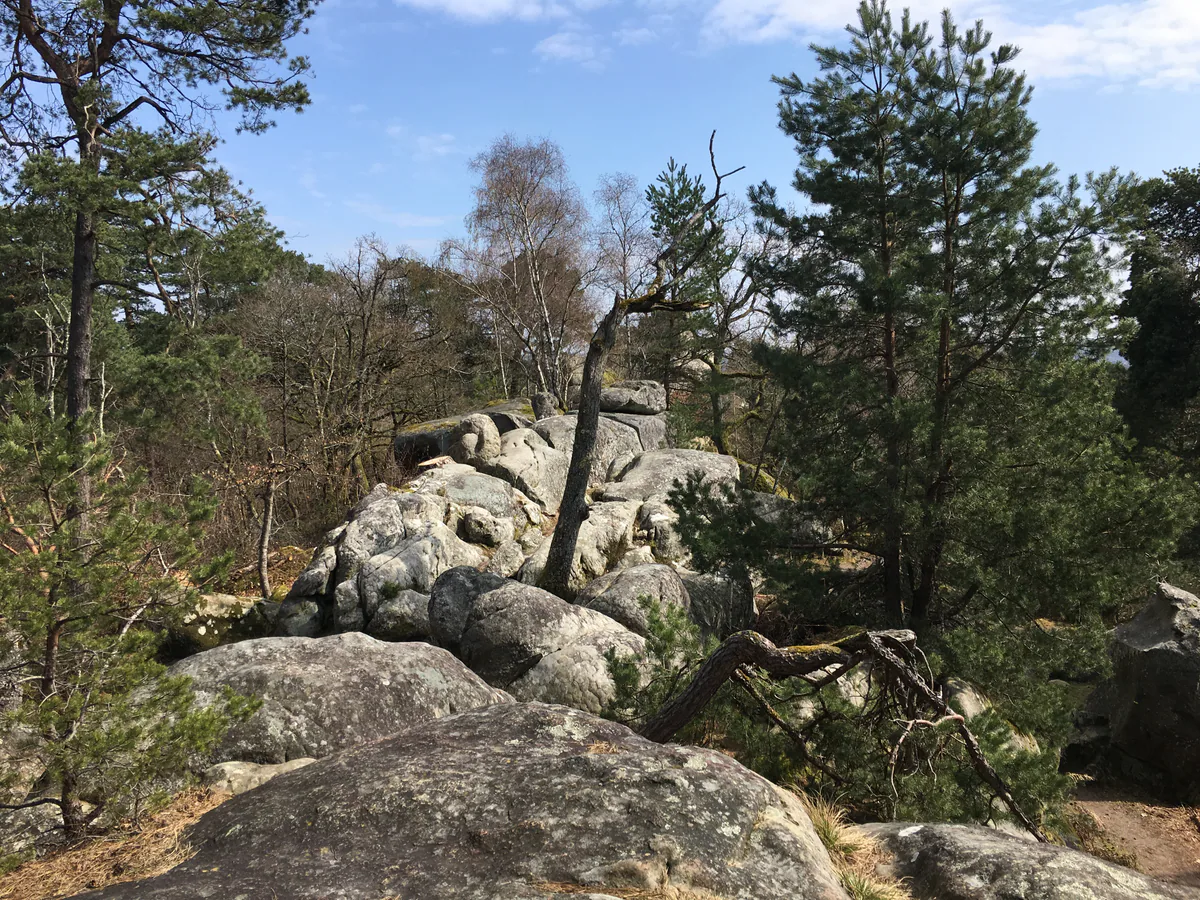
Choose by terrain, not by photograph
The Pays de Fontainebleau offers walking, bouldering, cycling, horse riding, paddling and navigation. They do not need the same weather, experience or starting point. Begin with your group and the day’s conditions.
| What you want | A sensible first option | What really decides it |
|---|---|---|
| A simple outdoor introduction | A waymarked walk | Terrain, duration and return route |
| A technical activity | An introduction to bouldering or navigation | Instruction, equipment and group experience |
| A linear day out | Canoeing or a station-to-station hike | Transfer, water level or return train |
| To cover more ground | Cycling or horse riding | Permitted route, ability and road crossings |
| A day with children | A compact loop and one short second activity | Tiredness, toilets, water and a fallback |
The tourist office introduces the area’s outdoor activities and current route collections. Use that overview to choose a discipline, then open the exact route page or contact the provider.
Walk to read the massif
Walking reveals the shifts among sand, sandstone, mature woodland and clearings. It is still the most flexible choice, provided you set out with a named route. Our walks and trails compare areas, while the short-walk guide sorts several options by time, terrain and purpose.
When arriving by train, choose the station and return journey first. Walks from railway stations separates a loop at Thomery from long traverses rated difficult. In the forest, a blue, yellow or white-and-red mark only helps when you know its number and network. Our waymarking guide keeps walkers from following a climbing circuit by mistake.
Following the July 2026 fires, check the ONF map of current access that morning. A barrier or signed diversion on the ground takes priority over your saved track.
Climb only when the sandstone is ready
Fontainebleau is one of the world’s great bouldering destinations, but a nearby rock does not turn a walk into a climbing session. An instructed introduction teaches safe landings, spotting, descents and use of pads. Read Bouldering in Fontainebleau before choosing an area.
The climbers’ charter published with the ONF and local organisations asks people not to climb in rain or high humidity. Damp sandstone is vulnerable. Keep shoes clean, use established paths and brush away chalk. If the rock has not dried, walk or visit a village instead.
Paddle the Loing with the logistics settled
A canoe descent or paddleboarding outing depends on water levels, weather, the launch point and the journey back. The Apikopa and Nature Loisir Évasion pages give you starting points for checking the formats currently offered.
Before booking, ask for the complete duration rather than just time on the water, required swimming ability, included equipment, what must stay dry and how the transfer works. A storm or operator instruction may move or cancel the trip. Moret-sur-Loing, Thomery and the riverbanks can still make an enjoyable day without launching.
Cycle between forest, Seine and Loing
By bicycle, a quiet forest road can lead to a much busier crossing. Begin with a published route and check its surface. The Seine cycling route between Bois-le-Roi and Moret-sur-Loing follows the local section of the Scandibérique and links woodland with the Seine. Download the current track and choose a bicycle suited to the surfaces shown.
Our Ronde à vélo page suggests other ways to connect landscapes and villages. With a family, test the bicycles first, place adults around younger riders and identify crossings rather than judging the outing by distance alone.
Horse riding and navigation offer different views
For a horse ride, describe your experience honestly. Arbonne Équitation and Caval&go let you check their current formats. Ask whether the session is an introduction, lesson or trail ride, what equipment is supplied and how the route responds to conditions.
Navigation turns junctions and contour lines into the activity itself. Cartographie Orientation introduces this kind of guidance. Confirm the group size, area, equipment and goal, since a gentle introduction, team exercise and independent navigation session are quite different.
Book with the right questions
For any instructed activity, ask for the exact meeting point, total duration, accepted age and ability, included equipment, clothing and bad-weather decision. Check who arranges the return when an outing ends elsewhere.
With children, reduce the plan and keep one main activity. Our family activities guide suggests flexible days, while family walks compare real terrain. An hour outdoors, a picnic and time in a village can be quite enough.
The best day is not the one that squeezes in three sports. It is the one where everyone knows what they are doing, has the right equipment and still has time to enjoy the place.